
If you are dealing with an aggressive or reactive dog, you probably want or even need a quick fix.
But your desperation can make you vulnerable to people who offer solutions that might be too good to be true. Any expert that leads you to believe a dog can be “fixed” or aggression routed out may be taking advantage of your vulnerability or simply may not have the experience needed to deal with your dog’s issues.
“Curing” dog aggression is the wrong way to look at the issue of dog aggression because all dogs have the potential to behave aggressively – just like we all have the potential to lose our tempers or defend ourselves when threatened. But we can make changes to deal with the immediate challenges now.
But while all dogs have the potential to behave aggressively, the majority of dog aggression problems are treatable (1). But the trick is to use the right methods in the right way.
The majority of dog aggression is treatable
There are many different kinds of methods that various dog owners and people in the dog industry use to treat aggression. Unfortunately some of these methods can backfire and actually make a dog aggression problem worse. See 5 Dog Treatment Methods to Avoid.
Obedience training with positive methods – while useful as part of a treatment program – does not actually treat the aggression. There are plenty of well trained dogs that behave aggressively.
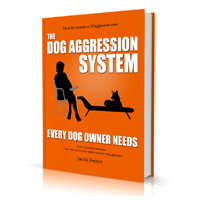
Treating dog aggression requires a systematic approach like the one in The Dog Aggression System Every Dog Owner Needs downloadable e-book. You need a complete science-based program that looks at the big picture and goes beyond obedience training.
Finding a very knowledgeable trainer or a certified behaviorist is another way to get help for your aggressive dog (see Who can help). Do your research and adjust your expectations. At the end of the day, you are aiming for a stress free enjoyable life with your dog! Starting off on the wrong foot can be disastrous.
Learn more about treating dog aggression.
You might also be interested in
What is involved in treating dog aggression.
Footnotes
(1) One example, the University of Pennsylvania School of Veterinary Medicine behavior clinic has a very high success rate with great improvement in more than 75% of all aggressive animals; 90% of aggressive patients improve to the extent that the owners are happy to keep them. This is significant given that behavior clinics tend to see the most extreme cases.