Your cart is currently empty!

Unveiling the Mystery: Causes of Dog Aggression
Dog aggression can be a frustrating and scary behavior for both you and those around your dog. The situation is also extremely unpleasant for your dog. Understanding the “why” behind it is the first step towards a calmer and happier future. However, there’s a lot of misinformation floating around about what causes dog aggression. So let’s debunk some common myths and explore the real reasons why dogs might act aggressively.
Forget the Alpha Dog Theory: Some people believe a lack of dominance or being “too soft” on your dog leads to aggression. However, there’s no evidence to support the idea that dogs see their humans as pack members or need an “alpha” leader. In fact, forceful dominance training can actually worsen aggression.
Beyond Breed Stereotypes: While some breeds might be predisposed to certain behaviors, it’s not a guarantee. Genetics play a role, but a dog’s upbringing, environment, individual experiences, and even physiology or medical conditions can be even bigger factors in the development of aggression. For example, a dog’s brain chemistry may get out of whack for unknown reasons or due to chronic stress, leading to changes in their temperament.
Past Doesn’t Always Dictate Present: A history of abuse doesn’t automatically mean an aggressive dog. Many abused dogs are incredibly loving. Similarly, a dog who seems well-adjusted can develop aggression later in life due to various factors.
It’s More Than Just Upbringing: While proper training and socialization are crucial, aggression can have complex causes beyond just a dog’s upbringing. We’ll delve deeper into the true causes of dog aggression in this article.
On This Page:
- Understanding the causes of aggression
- What we do to make aggression worse
- Next steps for our aggressive dog
Aggression is a symptom: Understanding the causes
It is important to understand that aggression is a symptom of an underlying cause. In some cases, aggression might be a normal, though undesirable, response.Other times aggression is not appropriate. But in all cases, aggression always stems from an underlying cause.
We can broadly categorize the underlying causes of dog aggression into three main areas.
Aggression may stem from one or a combination of reasons. For example, play can also escalate into aggression, and maternal aggression can be influenced by hormones (we’ll explore this further).
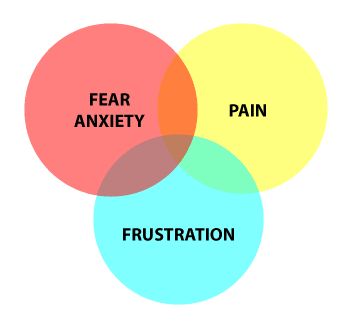
But to challenge the idea that dog aggression “just happens” it may help to broadly categorize the most common reasons for aggression into three common areas: fear/anxiety, frustration and pain/discomfort. It may be one or a combination.
Fear and Anxiety
Fear and anxiety are common causes of aggression in dogs. (2) (3) (5) While sometimes these emotions are a natural response to a threat, other situations might trigger fear or anxiety requiring medication to address. Remember, nearly all aggression cases involve a learned component.
- Fear
- Specific and targeted.
- Dogs might be afraid of dogs, bicycles, children, a specific child, men with hats, etc.
- Anxiety
- Generalized and vague.
- Uncertainty about what’s coming next or how others might react can make dogs anxious. As a result, this manifests as feeling on edge or being too worried to relax completely.
- Fear/Anxiety about negative feelings
- Often overlooked but crucial: Fear and anxiety are highly negative emotions for dogs. To avoid these unpleasant feelings, they might act out. For instance, a dog worried about other people’s reactions might “test” them to gather information. Similarly, jealousy can also trigger acting out behaviors.
Pain or Discomfort
Dogs often react aggressively when they’re in pain (2) While pain is a natural response to injury or discomfort, a learned component can develop over time.
Dogs frequently do not show pain and we may be unaware of how they are feeling until something becomes so obvious we can’t miss it. Always investigate if there are medical issues present whenever a dog becomes aggressive.
- Physical pain
- Dental problems, arthritis, sore paws, backs, joints, sore paws, digestion problems, etc. Check out medical causes of dog aggression for more information.
- Poor health
- Fatigue, lethargy, depression, etc.
- Negative feelings.
- irritation, jealousy (7)
Frustration
Frustration is an unmet need or desire and can contribute to aggression in dogs (8). In all likelihood, there are varying degrees of frustration, and at some point, there may be a tipping point. Some scenarios that may cause frustration in dogs.
- Feeling cornered: This can happen when a dog feels trapped in a situation with no escape route.
- Unmet needs: Frustration can build when a dog’s basic needs like food, water, exercise, or playtime aren’t adequately met
- Forced or pressured: Being forced to do something they dislike or fear can trigger aggression in some dogs.
- Lack of control: Dogs who feel they have no control over their environment are more likely to become frustrated and aggressive.
- Disrespected space: When a dog’s personal space is constantly invaded, it can lead to feelings of anxiety and potential aggression.
- Mixed signals: Mixed messages about expectations or confusing punishments can leave a dog unsure of what’s expected and frustrated by the inconsistency.
- Blocked desires: If a dog is prevented from reaching something they see as desirable, like a toy or another animal, frustration can turn into aggression.
The issue: Most canine behavioral problems either involve normal behaviors that people don’t like or understand or anxiety-related concerns that comprise true behavioral diagnoses. – Dr. Karen Overall, Dumbed down by dominance, 2012
Factors that contribute to the development of the underlying causes of aggression in dogs
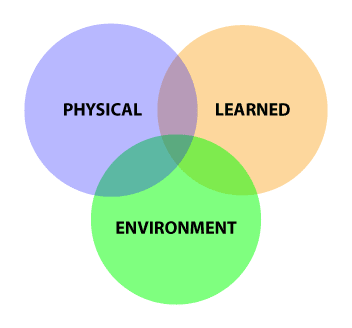
Physical Aspects
Dog aggression isn’t just about past experiences or current situations. There’s more to it! Several factors built right into your dog, like their natural instincts and how they handle stress, can also influence aggression.
- Temperament
- Genetic (6)
- Congenital (present from birth) diseases, disorders or conditions
- Hormonal (levels and receptor density) (4)
- Neurophysiologic (6)
- Science relating to physiology and how the brain works in conjunction with the nervous system
A Dog’s Past Shapes Their Present:
Past learning affects how dogs respond to occurrences in the present. Fear, negative experiences, failures and successes greatly shape how a dog responds now.
Just like us, a dog’s past experiences significantly impact how they react to situations today. Here’s how:
- Memories of Fear and Negative Events: A dog that has had a scary or unpleasant experience in the past, might be more likely to react with fear or aggression in similar situations now.
- Learned Associations: Dogs can learn to associate certain things with negative experiences. For example, a dog who was startled by a loud noise during a walk might become fearful of going on walks in general.
- Generalizing from Bad Experiences: Unfortunately, dogs can sometimes take a bad experience with one person, animal, or object and generalize that fear to anything similar. For instance, a dog who was attacked by another dog might become fearful of all dogs.
- Lack of Socialization: Puppies who don’t get exposed to a variety of people, animals, and environments during a critical development period might be more anxious and fearful of new things as adults.
The Role Of Socialization
Puppies have a critical development period where exposure to a variety of experiences builds their confidence. However, without this exposure, they may develop fears of those things later in life. Some dogs even need ongoing positive experiences with different things to maintain their confidence.
That being said, dogs with poor socialization histories during the critical phase or who have learned fear from a negative experience are not beyond help. Behavior modification may take longer but it’s possible to make life better for these dogs (and for you!)
Environment
We primarily focus on the immediate circumstances of aggression as a way of understanding it. But stress can play a big factor in the development of aggression and we might not even be aware of what is contributing to it, or how we can alleviate it. In some cases basic – and simple – changes can make a big difference. Here are some factors that could be playing a role:
- What occurs immediately before the aggression
- Social interaction and mental stimulation
- Stress in the environment (ie. noise, threats, frustrations)
- Predictability (ie. routines and schedules)
- Exercise needs
- Nutrition needs and affects
- Boredom
What we do to make dog aggression worse
Our intentions are usually good but there are several things we can and often do that make things worse.
Allowing the aggression to continue to occur
Dogs are not simply misbehaving. Aggression is not just “behavior”, it is a coping response. But each time the aggression occurs, the brain rewires itself to be a little better at making that process occur more efficiently and effectively.
Using training methods that make things worse
In many cases, aggression can attract the kind of responses from humans that make the situation worse. Either we become frustrated or we take on bad advice such as intimidating the dog as a way to try to deal with it. Beware of outdated training methods! Popularized by the media, these methods can actually worsen aggression in predisposed dogs. (see 5 treatment methods to avoid and the world’s worse dog aggression advice). Dogs don’t choose to be fearful or anxious or frustrated. Check out treatment methods that will help.
Ignoring signs of stress
We miss the signs that we could act on to help our dog avoid unnecessary stress. Behaviors such as turning the dog turning his or her head away, stiffening, licking of the lips, and putting the ears back are just a few. These signals are important to learn if we have a reactive, fearful, or aggressive dog.
Not meeting needs
These days, with our busy schedules, it’s easy to unintentionally neglect our dogs’ needs. While we might shower them with love, sometimes we overlook the importance of proper care. After all, dogs thrive on a combination of factors: stimulation, exercise, social experiences, a healthy diet, a sense of freedom, and consistent routines. Unfortunately, neglecting these aspects can have negative consequences. Leaving dogs alone for extended periods, keeping them tethered outside all day, or isolating them significantly increases their risk of developing behavioral problems. In contrast, dogs who receive the proper care and attention are far less likely to experience these issues.
Not recognizing health concerns
Sudden aggression in dogs might be a result of medical issues that contribute to dog aggression or simple pain or discomfort of any sort. Veterinary behaviorists often find medical conditions in addition to behavioral problems in the dogs they see. (1)
Your first step should be to see a vet. However, even when the dog’s aggression is completely a result of pain, it is very likely that you will need to do behavior modification to change the associations your dog developed while the situation developed.
Assuming that “That’s just the way the dog is”
Talk to your vet about any unusual behavior, whether it’s repeated paw licking, excessive drinking, barking at nothing, chasing imaginary flies, lying with a head under a seat, etc. In particular, anxiety may manifest in unexpected ways and this may shed some light on your dog’s aggression issues.
In some cases, it may be that it’s just the way they are. Your dog might be genetically predisposed to overreacting or misinterpreting important communication signals.
This does not mean they are beyond help, however. There are ways to humanely treat dog aggression just as we would try to help people with mood disorders or behavior challenges.
Next steps for treating your aggressive dog
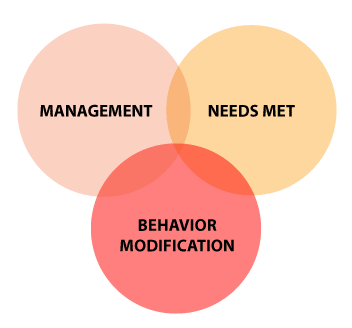
Dog aggression is stressful – for your dog and those around them. To improve it, there are three main areas that dog owners should review to improve the lives of their dogs and those around them.
Management
To treat the underlying cause of aggression, preventing it from happening in the first place is crucial. Don’t fall into the trap of thinking punishment will “fix” the behavior. Aggression is the end result, not the beginning, of a sequence of events. The dog’s brain rewires itself, making the aggression more likely to repeat, regardless of punishment.
- Get further distance from the circumstances and situation causing the anxiety and aggression. You might be interested in 6 Other ways to keep others away from your dog to learn more.
- Teach your dog a variety of commands and cues to help navigate situations where your dog might start feeling anxious.
- Avoid the circumstances and situations that cause anxiety and aggression – see how anxiety is related to aggression. For example, if the dog reacts when pushed off the bed, avoid pushing them off the bed. Instead, use reward-based training to teach them to move to another area.
Meet Needs
Dogs have a variety of needs – from basic needs for exercise and social interaction to more complex needs for medication. Some needs are general to all dogs, and some are very specific to the individual. Anxious dogs in particular are more vulnerable to stress.
Therefore some stress-reducing strategies should be included to meet the needs of the dog. At a minimum:
- Consult your veterinarian to rule out any medical causes of aggression.
- Develop a safe and trusting relationship and environment
- Ensure your dog’s basic needs are being met adequately. Going above and beyond may improve stress and passively improve aggression.
Behavior Modification
Behavior modification can be done through both passive and active approaches. Passively, you can create an environment that discourages unwanted behaviors. Alternatively, you can actively target specific behaviors through training. In either case, the ultimate goal is to modify behavior by addressing the underlying cause.
This means developing a multi-pronged approach that includes:
- Strategies to reduce anxiety: Helping your dog feel calmer can significantly decrease the likelihood of aggression.
- Developing better tolerance and coping skills: Teaching your dog how to manage stressful situations in a positive way can prevent aggression.
- Creating new positive associations: Conditioning your dog to associate positive emotions with situations that previously triggered aggression can be a powerful tool for change.
Here’s how to get started:
- Teach your dog how to relax: Relaxation techniques can significantly reduce anxiety and create a calmer, more manageable dog.
- Develop your dog’s self-control: Teaching impulse control exercises helps your dog resist triggers and make better choices.
- Treat the underlying causes: Addressing any medical conditions or phobias contributing to the aggression is crucial.
For more information on humane and effective treatment methods, you can:
- Consult your veterinarian: They may be able to recommend a veterinary behaviorist for more specialized help.
- Consider a force-free trainer: Look for a trainer who uses positive methods and has a successful track record in treating aggression. (For less serious cases, a force-free trainer might be a good option.)
If you’d like to delve deeper into treating dog aggression, consider checking out The Dog Aggression System Every Dog Owner Needs e-book. It discusses management strategies, treatment methods, things you can do to modify the dog’s environment that will help, as well as the common traps and pitfalls to steer clear of.
References
(1) Ilana R Reisner, Frances S Shofer, and Michael L Nance, Behavioral assessment of child‐directed canine aggression, Inj Prev. 2007 Oct; 13(5): 348–351. http://www.ncbi.nlm.nih.gov/pmc/articles/PMC2610618/
(2) Frank D., Aggressive dogs: What questions do we need to ask? Can Vet J. 2013 Jun; 54(6): 554–556. http://www.ncbi.nlm.nih.gov/pmc/articles/PMC3659447/
(3) Overall KL, Clinical Behavioral Medicine for Small Animals.
(4) Sayaka Arata, Yukari Takeuchi, Mai Inoue, and Yuji Mori, Reactivity to Stimuli” Is a Temperamental Factor Contributing to Canine Aggression, PLoS One. 2014; 9(6): e100767. http://www.ncbi.nlm.nih.gov/pmc/articles/PMC4074066/
(5) Katriina Tiira and Hannes Lohi, Early Life Experiences and Exercise Associate with Canine Anxieties, PLoS One. 2015; 10(11): e0141907. http://www.ncbi.nlm.nih.gov/pmc/articles/PMC4631323/
(6) Heidi G. Parker, Abigail L. Shearin, and Elaine A. Ostrander, Man’s Best Friend Becomes Biology’s Best in Show: Genome Analyses in the Domestic Dog, Annu Rev Genet. 2010; 44: 309–336. http://www.ncbi.nlm.nih.gov/pmc/articles/PMC3322674/
(7) Christine R. Harris and Caroline Prouvost, Jealousy in Dogs, PLoS One. 2014; 9(7): e94597. http://www.ncbi.nlm.nih.gov/pmc/articles/PMC4108309/
(8) Daniel Mills, Christos Karagiannis, Helen Zulch, Stress—Its Effects on Health and Behavior: A Guide for Practitioners, Vet Clin Small Anim 44 (2014) 525 541, https://www.researchgate.net/profile/Christos_Karagiannis/publication/260759234_StressIts_Effects_on_Health_and_Behavior_A_Guide_for_Practitioners/links/553515ea0cf23947bc0ae9bc.pdf
(9) J.M. Koolhaasa,*, S.M. Korteb , S.F. De Boera , B.J. Van Der Vegta , C.G. Van Reenenb , H. Hopsterb , I.C. De Jonga,b, M.A.W. Ruisb , H.J. Blokhuisb, Coping styles in animals: current status in behavior and stress-physiology, Neuroscience and Biobehavioral Reviews 23 (1999) 925–935, Retrieved Mar 1, 2023 from https://research.rug.nl/en/publications/coping-styles-in-animals-current-status-in-behavior-and-stress-ph
(10) Alexa H. Veenema Inga D. Neumann, Neurobiological Mechanisms of Aggression and Stress Coping: A Comparative Study in Mouse and Rat Selection Lines, Brain Behav Evol 2007;70:274–285, https://www.researchgate.net/profile/Alexa_Veenema/publication/5931276_Neurobiological_mechanisms_of_aggression_and_stress_coping_a_comparative_study_in_mouse_and_rat_selection_lines/links/00b7d513f7d312e9d3000000.pdf
ADVERTISEMENT
Keep people away with our Stand back shirts
Anxious Dog Shirts only available in our shop