Your cart is currently empty!

MEDICAL ISSUES OVERVIEW

Can you dog blame dog aggression on poor health?
Up to 50% of the human-directed dog aggression behavior cases seen by University of Pennsylvania between 2002 and 2005 had additional medical complications. Up to 40% of these cases were orthopedic or dermatologic medical conditions, but other conditions were also suspected or identified. (1)
Dermotologic conditions relate to the skin and nails and may be more easily seen by a dog owner, but orthopedic conditions relate to the skeletal system which may be difficult for the average person to detect. If a dog is experiencing chronic pain in his or her spine, we might be completely unaware of it. Other conditions that were identified included other conditions and diseases including infections, eye problems, kidney problems and so on.
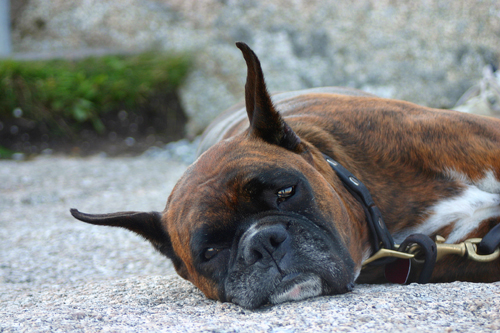
Increased aggression around food and an increased appetite could be related to hormonal diseases. The loss of hearing or sight can cause a dog to be caught off guard, resulting in aggression. Epilepsy may also lead to aggression. Certain dog breeds are more likely than others are more susceptible to hereditary Primary Epilepsy, but there are many other causes of epilepsy, some of which are unknown.
Cognitive Dysfunction Syndrome which is associated with age related degeneration can be managed through medication, and environmental and behavior modification.
The boundaries between health and behavior
As scientists learn more about genome and cellular effects on behavioural conditions, it will become more difficult to separate the physical from the behavioural. (2) In addition to this, it is commonly accepted that stress has a huge impact on health so what causes what?
When dog owners are looking for the cause or the cure for our dog’s aggression problems, we hope that aggression can be treated simply. Unfortunately, it is difficult to determine whether a medical condition is solely responsible for a dog’s aggression problem and it is more difficult to assume that correcting a health problem will resolve the aggression. Learning will always be a component to aggression even if it the aggression is caused by a treatable condition.
It is more useful to look at a behavior problem from all sides.
How dog aggression is affected by medical problems
What we do know is that it is common for sick dogs and dogs in pain to behave differently than they normally would when they are feeling well. A change in behavior is often the first sign that something is wrong.
Dog aggression can be made worse by any kind of illness, injury or chronic pain. Underlying medical problems such as painful muscles, joints, and teeth, an uncomfortable gastrointestinal system or neurological problems can all cause behavior changes. For example, hip dysplasia which is very common in dogs will either make aggression worse, or cause it to occur in dogs that have had no previous history of being aggressive.
Aggression related to health issues can be directed toward the nearest human or animal. When dogs are aggressive because of pain, they often will show aggression in situations that people used to think was “dominance aggression”. For example, aggression that occurs when we force the dog to move when resting, when we remove our dog’s food, or when we try to control our dogs in other ways.
Dogs in pain tend to be more reactive. This means that they may not give us any warning signs that they are going to behave aggressively.
addressing the learning component in aggression
Unfortunately, even when there is a medical component to aggression in dogs, there is almost always a learning component, too. Even if the aggression is directly caused by pain or illness, your dog will have been fearful or anxious at the time and will have learned from that experience that there is something to worry about.
Keep in mind that that by the time aggression occurs, fear and anxiety responses form, and the brain easily jumps to them. Once the medical issues are treated, your dog will need to re-learn that certain situations are okay again.
It means that even when your dog has recovered, or has his pain and discomfort managed, there will be residual effects left over as a result of aggression having happened. An aggression problem left untreated may resurface again.
Fortunately it is possible to improve most aggression problems with diligence on behalf of the dog owner. Our e-book on treating dog aggression outlines a number of different strategies that can help, from different ways to prevent the aggression from even occurring to directly targeting his anxieties and fears and helping him or her to feel differently about the situation.
Given that most dogs will experience some illness and pain as they age, it is a very good idea to start working with your dog to help him or her cope better. The best thing about it is it helps you to enjoy your dog again.
Ruling out medical causes of dog aggression
It is advisable that at the onset of any sign of aggression, all possible medical causes are ruled out. If an injury, disease, genetic or congenital defect is deemed the cause of the dog’s mood swings or aggression, then training will be less effective until the problem has been resolved or controlled. Some conditions can be completely resolved, while other conditions (like Hypothyroidism) can be effectively treated with medication prescribed by your veterinarian.
If the temperament problem is genetic in nature, then the likelihood that the animal can be completely cured of the aggression is minimal. However it is possible to improve the aggression with retraining, and treatment would then concentrate on the “management” of the behavior rather than an absolute cure. Check out the ebook for difference ways to manage aggression in detail.
The best professional to consult for this is a veterinary behaviorist in serious cases. Your vet can do this on your behalf.
Medical conditions that can cause aggressive behavior in dogs
Aggression does not occur in all dogs with any of these medical concerns, nor do all dogs that show aggression necessarily have any of these medical problem. But the following conditions have resulted in aggressive behavior in many cases.
- Infectious diseases (Viral, bacterial, parasites)
- Brain tumours or lesions
- Nutritional deficiencies (tryptophan or thiamine) or high dietary protein
- Trauma or pain
- Hormonal (hyper- or hypo- thyroidism or sex hormones)
- Epilepsy
- Dermatological lesions
- Medications (Corticosteroids, Phenylpropanolamine)
- Diabetes
- Testicular or adrenal tumors
- Metabolic disorders (hepatic / renal)
- Peripheral neuropathy
- Any condition which causes inflammation of the brain, can also cause neurological problems, including aggression.
See the following conditions that may lead to dog aggression for more information:
• Brain chemistry/Imbalances
• Hypothyroidism
• Encephalitis (bacterial or viral) Distemper
• Hypoglycemia
• Hydrocephalus in brachycephalics
• Brain tumors
• Head trauma
• Behavioral Seizures
• Medicines
References
(1) Ilana R Reisner, Frances S Shofer, and Michael L Nance, , Behavioral assessment of child‐directed canine aggression, Inj Prev. 2007 Oct; 13(5): 348–351.
(2) Overall KL, Medical differentials with potential behavioral manifestations, Vet Clin North Am Small Anim Pract. 2003 Mar;33(2):213-29.
(3) ed. Horwitz D., Neilson JC, Five-Minute Veterinary Consult Clinical Companion: Canine and Feline Behavior, Wiley, Chapter 23, Aggression: medical differentials, 2013
(4) Martin, D. Canine and Feline Behavior for Veterinary Technicians and Nurses, Blackwell, 2014
(5) Haug LI, Territorial Aggression in Dogs, Clinician’s Brief, April 2014
(6) Horowitz D, Medical Causes of Behavior problems in Dogs and Cats, 2015 Midwest Veterinary Conference 2015
ADVERTISEMENT

Keep people away with our Stand back shirts
Anxious Dog Shirts only available in our shop