Your cart is currently empty!

TARGETED BEHAVIOR MODIFICATION
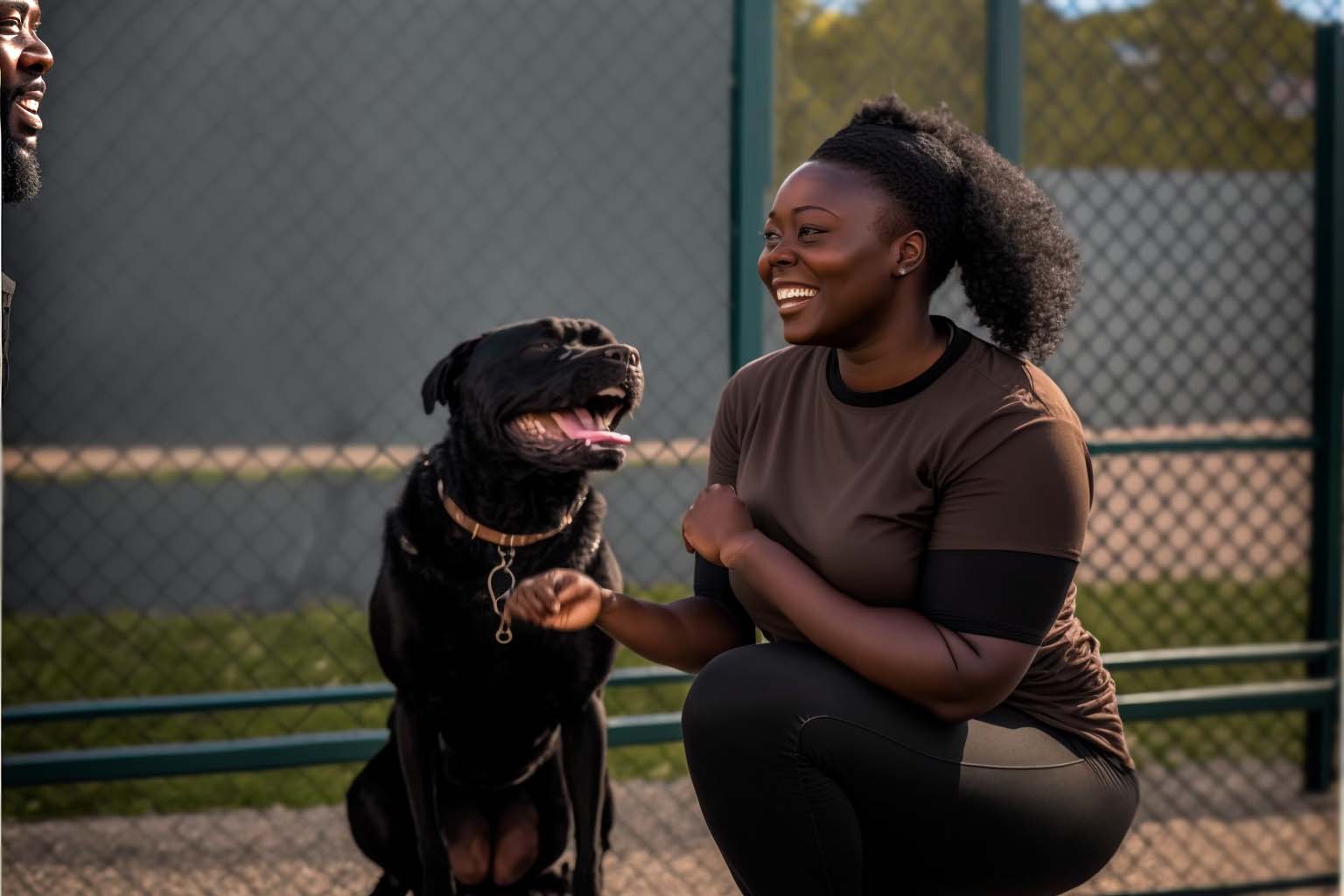
Direct behavior modification is the final step in the process. It assume that other steps (environmental control, deference training, relaxation training) are in place and:
- Stress has been substantially reduced in the dogs life and the things that are triggering the aggression are being avoided consistently
- The dog is deferring to you and the other people in the house for everything she or he wants
- Your dog has learned how to relax in a variety of distracting, but non-threatening situations and can do this on cue.
Caution: You can make your dog worse with these methods, by pushing your dog into more than he is ready for. It is recommended that you consult a qualified professional to help you to create a specialized plan that is right for you and your dog. Have a look at our Who Can Help page for some guidance on the kinds of professionals that can help.
Active Behavior Modification
A. Determine the specifics of the response – i.e. how close do you have to be, is it how does it change when the distance changes (coming or going) and begin retraining using those things you have identified, but which will only produce a low level response.
B. Find the edges of those boundaries and use the relaxation coping strategies to manage his anxiety
C. Use counter conditioning to make that experience an enjoyable one. This involves using the use of a motivating reward such as treats or play once the dog relaxes so that your dog starts to associate good things happen in that situation. If he or she can’t relax, you are too close, or there are too many other distractions, or he or she is not ready to this step yet.
Difficulties
This stage of the process is the most difficult for owners to accomplish for many reasons. Its not because the process is difficult. Instead
- Owners haven’t yet learned how to read their dog’s behavior,
- Have not practiced the relaxation training enough for the neurons to be sufficiently developed
- Try to push the dog too far before its ready
- Continue to expose the dog to the things that cause the anxious/aggressive reaction
Essentially the dog must be fully able to relax on cue.
- Approach the least threatening approximation of the threat.
- Watch for the dog ‘s body language.
- Practice relaxation work
- Reward the dog
- Move closer, stay longer, or go to the next least threatening approximation of the threat once the dog is showing he or she can stay calm under the circumstances.
Remember, at the very first sign that the dog is becoming concerned, you must interrupt his thoughts and feelings and move him away to do something fun. The fun part helps to discontinue the habitual thinking that is part of the anxiety/aggressive sequence.
See: Environment Control
See: Relationship building – Deference
See: Foundation Training – Relaxation
ADVERTISEMENT
Keep people away with our Stand back shirts
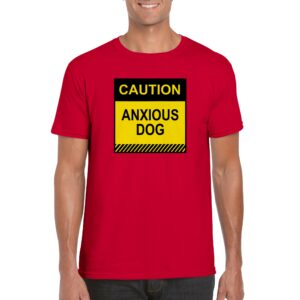
Anxious Dog Shirts only available in our shop