Your cart is currently empty!

15 ways you can help your dog beat boredom (Part 3)

This is Part 3 of our Environmental Enrichment series where we give you 15 tips on how to mentally and sometimes physically stimulate your dog.
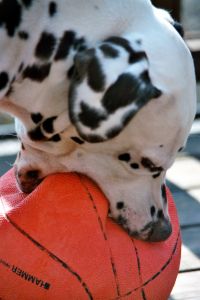
Many of these suggestions involve food, since dogs would naturally spend a lot of time tracking down food in the wild. For example, African wild dogs spend an average of 3 and a half hours a day hunting for food, and resting the rest of the time).
Discloser: Please note that some of the links below link to products found on Amazon. K9aggression.com is an Amazon affiliate. We have marked all these with “#ad” so you can tell which ones these are. These links allows us to earn advertising fees to help pay for the site at no additional cost to you should you decide to buy. However, we never recommend anything to you that we don’t sincerely believe are helpful and useful. Please don’t spend any money unless you feel you need them or that they will help you.
15 ideas for boredom busters for your dog
Providing additional enrichment for your dog has wide reaching benefits.
1. Food toys
Food toys are popular, but how many of you feed your dog his or her meals this way?
Puzzles can provide dogs with much needed stimulation. While many owners are looking for something to occupy their dog when they are gone, anything that requires the dog to think will tired them out. Some your dog can have while you are supervising, others you might be able to leave with them when you go (you need to be able to assess what kind of chewer your dog is first). Change them up frequently!
Here are some highly recommended ones to consider.
a) 

Kongs: The rubber play toys that can be stuffed a zillion different ways! Plus, fun for dogs to chase a thrown kong! The red ones are the ones many dog owners are familiar with but they also have the black ones that are recommended for the most powerful chewers.
- Try smearing sticky peanut butter on the inside.
- Freeze moist food inside so that it “sticks” together and is more difficult to get out making the food in the kong last longer.
- Block the small end hole up and pour unsalted chicken broth in them and then freeze.
b) Buster Cubes (#ad)
The buster cubes have been around for a long time. They are pretty indestructible and deliver food as the dog rotates the cube
c) Large indestructible balls with holes for small bits of food to fall out of: The size of them allows dogs to push them around without chewing them up. The one we got was the size of a basket ball or so that contained one or two holes at either end – great for pit bulls! You fill the ball up with food and they push it around trying to get the food out of it (just watch out for attracting ants).
You can get these ones at Boomerball.com. But as of writing this you can get the less expensive variety at Amazon. You may want to choose to drill in holes in some or get the ones that already have them, or leave them as is to play with in the water (such as a child’s plastic wading pool). For the most part they can be left alone with the dog, but again it depends on the dog.
d) Nina Ottosson sets of interactive games (#ad)
In order to survive dogs needed to hunt and in order to be successful hunters, they needed to solve problems. To maintain our dogs’ well-being, we need to provide them with experiences that mimic this. The Nina Ottosson sets of interactive games games make it pretty easy.
They were designed by a dog trainer and have different levels of difficulty. The one shown here is considered to be medium difficulty for dogs (its possible to adjust the difficulty of it somewhat). But if your dog doesn’t have any experience with puzzle games, you should start off with an easy game, such as the The Dog Magic(#ad).
If your dog does have experience with puzzle toys, look into one of the more difficult games.
The pieces are not meant to withstand excessive chewing so pick it up when you are done and don’t leave your dog unsupervised with one.
There are a variety of many different versions of challenging dog games. Depending on the breed and the individual temperament of your dog you may have to try a few different ones. Some dogs don’t understand what they need to do at first so help them along and have some patience.
SEE ALSO: Health and Your Mixed Breed dog – Can Science Predict Problems?
e) HomeAlone have a range of toys (Aussie Dog Toy) the ones that have dogs pull rope/bungee cord to release a small amount of food in the ball from above are expensive, but popular.
f) Even inexpensive plastic bottles or containers or cans drilled with holes can be used – put some small amounts of food inside and see what they do! Make sure you supervise, especially when using plastic bottles – some dogs will crunch these too easily!
Treat Dispensing Two way Audio and Cameras
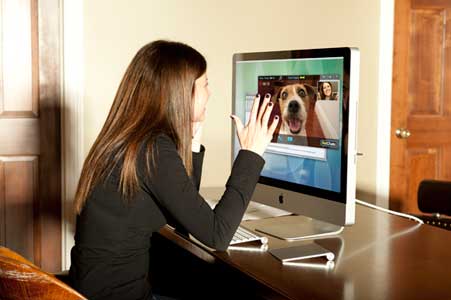
g) On the more expensive side (varies between $380 and $150 at the time of writing), how about considering a treat dispensing camera (#ad)for when you are not home?
Remotely deliver your dog a treat from your cell phone! One version has a laser toy, others offer two way audio or even two-way video. Perfect for when you are worrying about your dog home alone: you can interact with them while making sure they’re doing ok. Check out our top 4 treat dispensing camera for our top suggestions.
2. Automatic ball thrower
I know, sounds too good to be true, right? It’s not for all dogs or situations, but if your dog likes to play fetch and doesn’t tend to chew up tennis balls or plastic balls, (especially if you are willing to train them how to put the balls they fetch back in), this might be a idea for your dog.
The iFetch has a couple of versions you might try, (but skip the iFetch Frenzy as it doesn’t throw). The iFetch Interactive Ball Thrower for Dogs(#ad) is for smaller dogs because of the size of the balls. This one uses miniature tennis balls (or squash balls) and throws the mini-tennis balls between 10 and 30 feet. It can used inside or outdoors (plugs into a wall or uses batteries). It runs at about $115.00 USD as of the time of writing.
There is also the iFetch Too Interactive Ball Thrower for Dogs-Launches Standard Tennis Balls (#ad) for larger dogs (UPDATE seems to be out of stock right now).
TIP: It may take a little time for dogs to get used to it. Introduce it gently. Have someone play it in another room and each time it shoots a ball give your dog a treat.
TIP: Your dog may need to be trained to both put the ball back into the machine, but also to avoid standing directly in front of it! Some dogs stand right in front of it, and get hit in the face! So make sure you train the dog to sit before it is released.
A less expensive alternative hovering at around $50 or so (if you are lucky, you might be able to find it discounted on Amazon) is the Franklin Sports MLB Pitching Machine (#ad)This one is better to use outside than in as it shoots the balls out about 25 to 35 feet. This is really for kids to develop their hand-eye coordination in batting baseballs, but hey, no reason why dogs might not like to have some fun with it.
It uses plastic wiffle balls, so again, you need to make sure your dog is unlikely to chew them up. Alternative balls to use are Jugs Poly Baseballs. (#ad)
If you are planning on training your dog how to put the ball in the basket, it may not get a chance to throw it very far depending on whether you dog likes to chase or catch. Have a look at this video so see how one German Shepherd uses it. It doesn’t go far but it’s obviously fun enough to keep him doing it!
3. Introduce your dog to new smells

Dogs primary way of collecting and assessing information about the world is though their nose. One reason why they may enjoy walks so much is that it gives them an opportunity to experience novel enrichment. But we can provide some stimulation around the home, too. Novel food, spices, second hand shops or garage sales can be good for finding items with different smells.
You might also be interested in a book called Smellorama: Nose Games for Dogs (#ad) or Fun Nosework for Dogs, 2nd Ed. (#ad) These games take advantage of what is considered to be specific typical activities for dogs, but breeds developed specifically for their abilities to smell (hounds are an obvious example, but many other breeds heavily relied on their noses to do jobs as well) would benefit from these games in particular.
4. Let dogs try small amounts of new food
While feeding your dog one type of food sometimes causes your dog not to be able to easily digest new types of food, those who feed their dogs a varied raw diet know that dogs can actually managed a variety of foods. If your dog is not used to it, make sure you don’t make any dramatic changes suddenly. Small amounts only. The point is to provide a novel experience, not to feed them. Make sure you know what foods are toxic and dangerous to your dogs. You might be surprised!
5. Teach your dog tricks
Any kind of positive-based training can be very enriching for dogs. Clicker Fun: Dog Tricks and Games Using Positive Reinforcement (#ad) is a great book to start off with. Impress your family and friends (assuming your dog likes your friends)! For those who are not yet familiar with click training, check out this introduction to clicker training. If your dog is chronically stressed, you might want to skip this one until they have had a long period of recovery.
6. Play 101 Things to do with a Box
Again, this game relies on clicker training which dogs love, but rather than try to encourage specific behaviours like you would for a trick, the game is looser in that you can just see what the dog can come up with. It is amazing how much a busy, attention-demanding dog can settle down after a game like this. (Again, for those who are not yet familiar with click training, learn more in this introduction to clicker training.)
Dogs that have been punished are often afraid to do anything other than what they have been previously trained to do. This makes teaching them to do new things difficult. So this game is often recommended to help “cross-over” dogs (dogs that have been trained with only force methods) to get comfortable in offering different behaviors.
Just as an aside, if you like to take pictures of your dog, this game can be a fun way to get your dog to interact with a prop.
7. Take your dog for a sniff walk
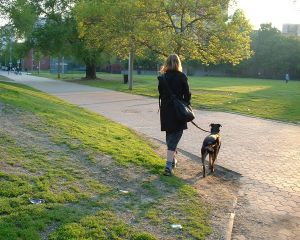
The aim here is not so much physical exercise, so much as the opportunity to explore the environment with their noses. Again, people often underestimate how important it is for dogs to smell. You might consider taking them to new places such as a baseball diamond, parking lot, stream or wood lot. If your dog is not aggressive, you might consider giving them a long leash.
But if your dog is aggressive, ensure others will be safe from your dog, and don’t expose your dog to anything that causes him or her to be anxious or become aggressive.
8. Groom or touch your dog differently.
Use different objects such as brushes you don’t normally use, or even other things like sponges, towels, clothes if they like it. Take care that it is a pleasant experience, however! While many dogs find touch rewarding, not all dogs do. If you are unsure, check out what everyone should know about petting dogs, first.
TTouch is another good consideration, It is a form of dog massage that many owners have found helps with a number of behavior problems. At a minimum it can provides an enriching experience. To learn more have a look at the book:
Getting in TTouch with Your Dog: A Gentle Approach to Influencing Behavior, Health, and Performance (#ad)
9. Play different and unusual sounds
What is your dog used to listening to? Look for recordings of animal sounds, nature musical instruments, and even different human sounds! There are 99 different tracks of animals (dogs, cats, etc. as well as sounds of nature on this CD: Sound Effects Vol.2 Nature & Animals. (#ad) Make sure you start with the volume low initially and consider pairing with food to make sure it is a pleasant experience for them.
10. Give your dog ice cubes or other frozen things
Ice treats such as meat juice (or unsalted broth made without onions), fruit or veggie juice, frozen mini carrots, or tiny meat cubes. You can even freeze toys or rope all the way or partially inside. Great way to cool down on those hot days! Again, make sure you know what types of food can be toxic and dangerous for your dog.
11. Create a treasure hunt
Scatter kibble or tiny food cubes in the back yard (if you are fortunate enough to have one) or even around your home for your dog to hunt down. Try leaving scent trails with food around the home. Some suggest that dog’s sense of smell is 1,000 to 100,000 times better than ours, so you need very, very little scent for this so don’t worry about smelling up your home!
12. Water: Hoses and wading pools
Some dogs love to chase, bite or try to drink water that comes from a hose.
Wading pools can also be fun for dogs. Some dogs will wade right in. Other like to “dig” for toys that may be lying on the bottom. And so like to “bob” for floating toys the way people bob for apples.
For those more cautious throw new or favoured toys or food into it. As mentioned above, the large indestructible balls, (#ad) especially ones without holes can be good for some dogs.
Swimming at a lake, pond or stream is another alternative of course but watch for bacteria in the water, ticks, etc..
13. Hide & Seek
Hide and call your dog to come to you. Alternatively hide treats or toys in different places (on shelves, under pillows, in pails, etc.) and ask them to go find it.
Hang an old tire from a tree and hide some food in it. Just make sure it’s strong enough to hold your dog’s weight and supervise to make sure he or she doesn’t become tangled.
14. Provide a sand pit for digging
We hate it when dogs dig up our lawns or gardens. But why not give your digging a dog a place where it’s ok to dig? Make a sand pit where digging is allowed.
Rake it from time to time – dogs like “disturbed” soil to investigate – one reason they get into your garden!
15. Create different kinds of bedding
Some dogs like to lie on, nest or “dig” in different kinds of bedding. Use can try blankets, paper, leaves, even old clothes. Take it one step further and make a blanket fort although be sure your dog will not get alarmed if it collapses.
16. Bonus ideas just for getting this far!
Create an agility course with some agility equipment (#ad) you can get for your back yard and train your dog different ways through it. You don’t need to get high quality equipment or spend much to get started.
If you are new to agility, here are some beginner books you might enjoy: Agility Training for You and Your Dog: From Backyard Fun to High-Performance Training or The Beginner’s Guide to Dog Agility. (#ad)
If you can teach your dog to “target” an object, in other words, teach your dog to touch a variety of objects with his or her nose, you can also have him running around your home from time to time, too. Up and down the stairs, from room to room can tire them out.
You can even move the target mid-run to use your target object for hide and seek as we mentioned above. Again, using clicker training can quickly teach your dog how to do this. Just make sure your dog will always be able to find it to prevent frustration.
IP: If Your Dog Loses Interest During Any Kind Of Training There Are Usually Three Reasons Why
1. The Treats Aren’t Quite Yummy Enough
It’s true, some dogs will eat just about anything sometimes. But even these dogs may prefer a piece of chicken over their kibble.
Other dogs may be pickier. But all dogs need to eat. If you find your dog turns his nose up, then use their meals rather than supplement his or her diet with food they don’t need. Use higher valued food for training.
Note that some dogs lose their minds over some food. If your dog is one of these, you may actually have to use a less rewarding food so that he or she can think straight. Pea sized pieces will do.
2. You Are Not Rewarding Enough
Frustration is not rewarding. A common training mistake is to expect more than the dog is capable of figuring our or doing. If your dog loses interest you may have to beak down what you are trying to train him or her to do in small pieces.
For example, you might be able to train your dog to touch your hand when its six inches away form his face but he might be completely confused what you want when you move three feet away.
This is because of how dog’s learn. They do not generalize the way we do. So instead of going from 6 inches to three feet, we go six inches to 8 inches. Then to ten and so on. Dogs need frequent rewards to stay motivated.
3. They’re Tired!
Yes, training tires them out, sometimes more than a walk does. Train often, but just for short periods.
Use your imagination for more! Remember:
- Avoid anything that might frighten your dog or make them more anxious
- Stimulation should be something they want to interact with on some level
- Supervise for anything that could get damaged or tangled, etc.
- If your dog has generalized anxiety, and environmental enrichment results in an increase of stress hyper vigilance, talk to your veterinarian about this.
Go to Part 1: Environmental Enrichment: Why it’s important
Go to Part 2: Environmental Enrichment: An overview on how to implement it
Go to Part 4: Environmental Enrichment: Play and Exercise
The information in this article is adapted from The Dog Training System Every Dog Owner Needs.
ADVERTISEMENT
The Dog Aggression System Every Dog Owner Needs E-book
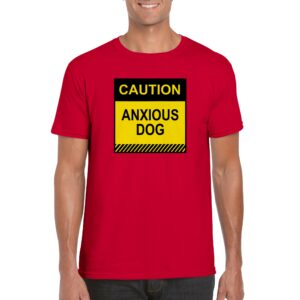
Anxious Dog Shirts only available in our shop
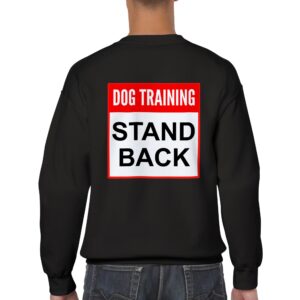
Keep people away with our Stand back shirts